
Kent County Arrest Warrants Explained
An arrest warrant puts a judge's or magistrate's order behind a taking into custody. Texas Chapter 45A governs the lower-court version in justice and municipal cases. There, a sworn complaint or affidavit plus probable cause is enough to set process in motion. Kent County publishes no chart of its issuing authorities and no count of open warrants. So the kind of case decides where you ask. Felony matters belong to the 39th District Court and the district side of the combined clerk. County-level cases run through County Court with the same clerk. JP or municipal warrants stay with the court that issued them.
Kent County Arrest Warrants Need Probable Cause
Probable cause is the working standard. It means the facts give a judge or magistrate a reasonable belief that an offense happened and that the named person or place is tied to it. A sworn complaint or affidavit supplies those facts. That is the legal framework, though, not a sign that Kent County hands out any public application form. For justice and municipal procedure, the clerk or court can tell you which parts of a case file are open. The statute itself, Texas Code of Criminal Procedure Chapter 45A, spells out the steps those courts follow.
Inside a Kent County Arrest Warrant
Kent County posts no sample arrest warrant. It also gives no number format or status code. A warrant typically names its court, cause number, offense, issue date, bond if one was set, and service return. Treat those as common record fields, not a Kent portal layout. When you call, ask the clerk to identify the cause number and the issuing court. Then ask whether the warrant is active, served, returned, recalled, or held up by something else. One caution applies here. Do not read a bond amount out of a general county fee schedule.
| Warrant identifier | Kent format not located |
|---|---|
| Issuing court | Judge or magistrate and the court tied to the case |
| Basis | Complaint or affidavit and probable-cause review |
| Release terms | Ask the issuing court or magistrate; no county schedule was found |
| Service return | Ask whether an officer returned the process and what the entry means |
Kent County Has No Arrest Lookup
The sheriff's official page is a contact page, nothing more. It lists no booking portal, warrant-unit subpage, bond window, or service-hours chart. What it does give is the sheriff's office address, phone, fax, and an email link. Call (806) 237-3801 and ask which agency or court can confirm your question. That number routes calls; the page makes no promise of phone status checks. The official sheriff page is where the county publishes that contact route.
Kent County Sheriff's Office
227 S. Main Street, P.O. Box 7
Jayton, TX 79528
(806) 237-3801
Serving Arrest Warrants in Kent County
The sheriff can serve local warrants, and so can any other peace officer authorized by the order. Which officer actually acts depends on the court and the warrant itself. Kent County names no warrant squad, service hours, booking facility, or walk-in surrender window, and it lists no special procedure for calling ahead. If an officer contacts you or a family member, verify the agency through an official number, then talk to a lawyer about the case. After an arrest, release turns on the warrant, the magistrate, the charge, and any other hold. Kent publishes no bond chart and no release-time estimate. The sheriff's page does link to statewide and federal law-enforcement resources. Those links do not create a county fugitive program or a public list.
Kent County Search-Warrant Affidavits May Be Sealed
An arrest warrant and a search warrant are different records. A search warrant authorizes a search for described evidence or property. Under Chapter 18, its affidavit generally becomes public once the warrant is executed. A judge may still seal it when statutory conditions are met. A sealed file is not a public pre-execution lookup, and a missing affidavit is no proof that no warrant exists. Ask the issuing court in Kent County what has been executed and what file you can see. Government Code Chapter 552 can also let law-enforcement records stay withheld in certain active investigations. The Chapter 18 statute itself covers affidavit access, contents, execution, and sealing.
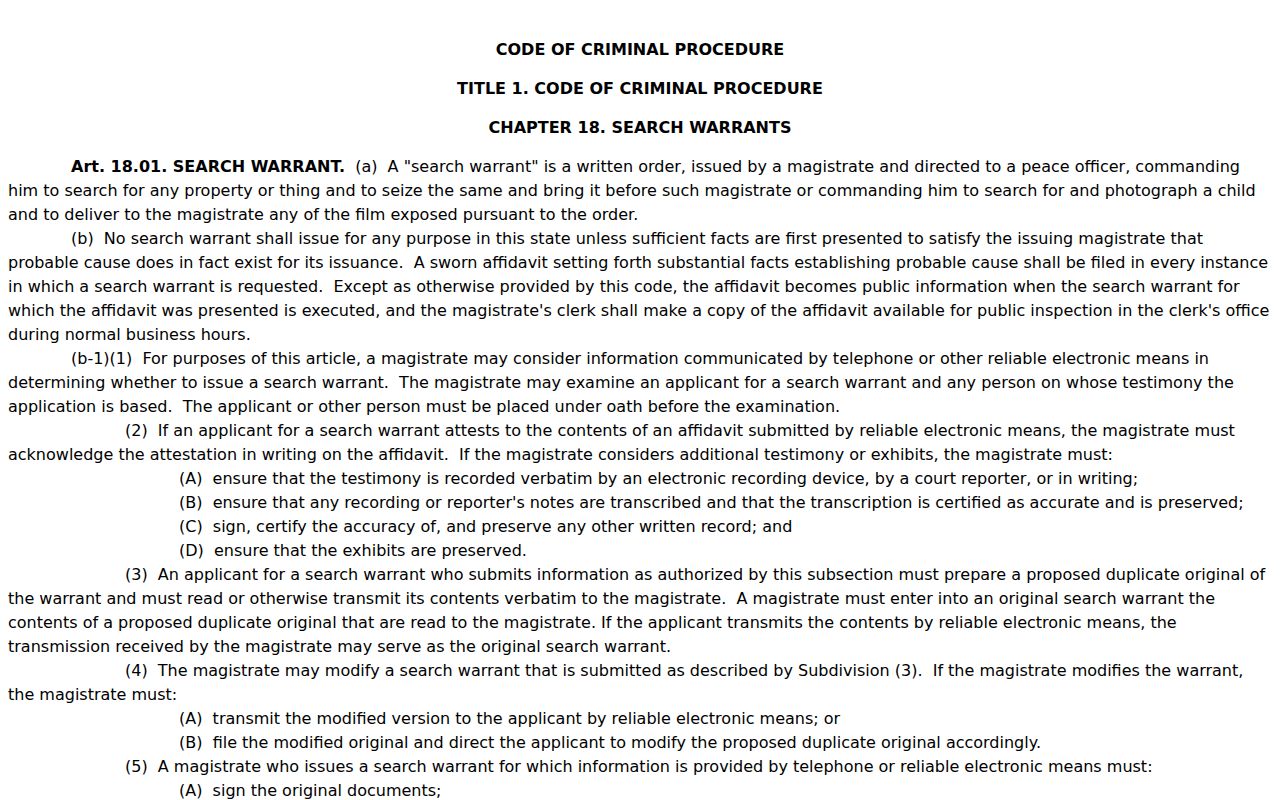
The statute governs the whole state, and it does not open a sealed Kent County file for you.
Comparing Arrest, Summons, and Bench Warrants
These terms mark different steps. An arrest warrant authorizes custody. A summons just calls you to court, without itself ordering an arrest. A bench warrant or capias can follow a missed obligation in a Kent County case that already exists. Read the court notice and ask which order was entered.
| Process | What It Does | Typical Basis | Local Confirmation |
|---|---|---|---|
| Arrest warrant | Authorizes arrest under its terms | Probable cause | Issuing court and sheriff |
| Summons | Directs a person to appear | Court process or charge | Court on the notice |
| Bench process | Responds to missed court duty | Failure to appear or comply | Court that set the matter |
Kent County Juvenile Arrest-Warrant Records Are Restricted
In Kent County, a warrant for a juvenile is not a public record. Texas Family Code §58.010 keeps the child's warrant, complaint, and affidavit confidential. Only certain officials, attorneys, and court-approved recipients may see them. The Texas Family Code Chapter 58 page sets out the full confidentiality rule.
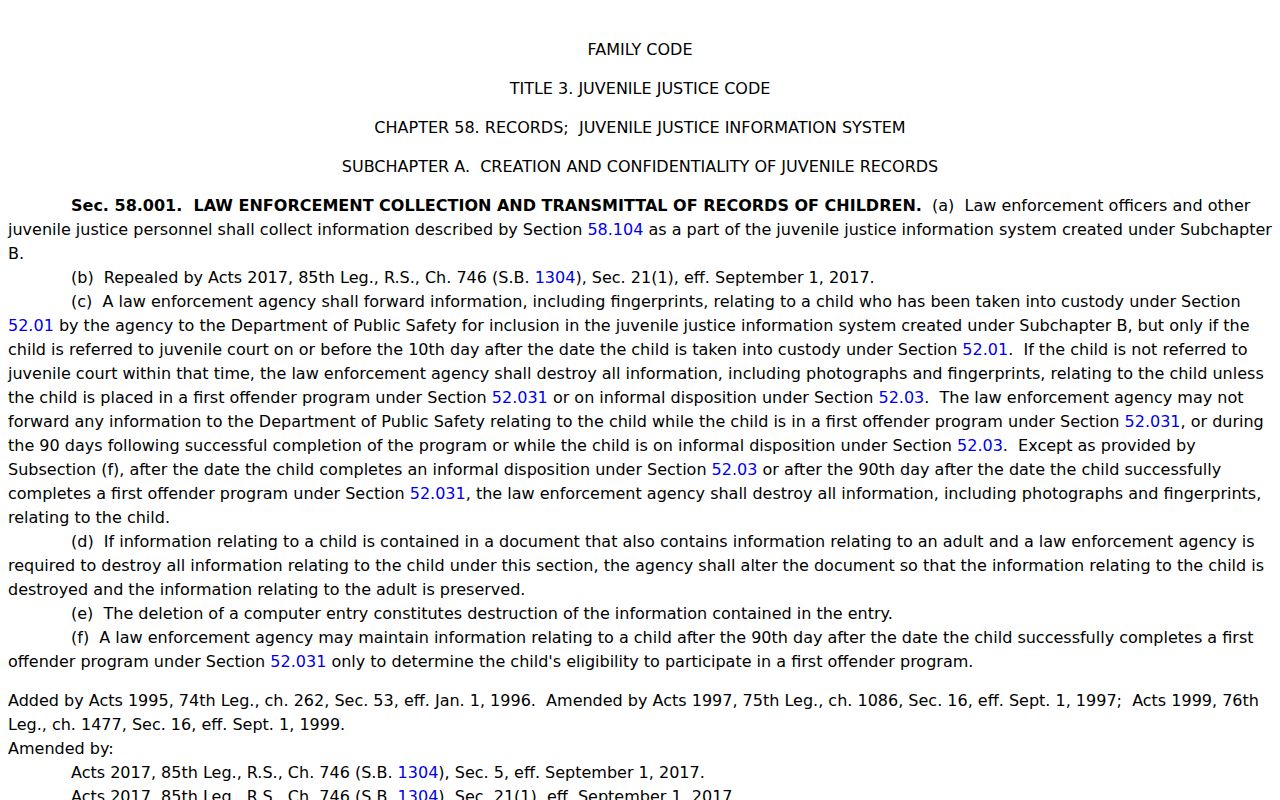
Kent County requesters with a right of access go through the authorized court route and leave private juvenile details out of repeated requests.
If There's an Arrest Warrant for You
Found out a Kent County warrant carries your name? Call the sheriff first for local routing, then reach the court named on the case. Two questions matter most. Ask whether the warrant is still active and whether bond has been set. Ask what the court wants from you before an appearance. Kent County publishes no special surrender protocol, no bond counter, no recall form, and no preferred payment method, so get those details by phone. A lawyer can help with voluntary surrender, bond, or a motion to recall or quash the warrant. Posting bond may win release, but it does not close the case. Trust a court order or a written receipt over any informal online status.
Important: Consider counsel before appearing. Call the court and sheriff first, since local sources do not publish surrender, booking, or release instructions.
The Kent County bench-warrant route applies when the process follows a missed court obligation.
Kent County Federal Arrest Warrants Route to Lubbock
Federal warrants follow a different track. Nothing about them runs through the Kent County Sheriff or the local combined clerk. The Northern District's Kent County venue page places the county in the Northern District of Texas, Lubbock Division. PACER may show federal case filings, though sealed filings and law-enforcement-only records stay hidden. The U.S. Marshals Lubbock office is the separate federal contact for that division. A Kent County answer cannot confirm a federal warrant's status, bond, or recall. Use the federal case number when you call counsel or the court.