
Searching for a Warrant in Kent County
Kent County publishes no online warrant search, so start with the court named on your ticket, notice, or prior case paper. Unsure which court it is? Call the Kent County Sheriff at (806) 237-3801 and ask which office holds the record. The sheriff's page offers a general contact number, not a promise of warrant confirmation. Different files live in different places. District and county cases route through the combined clerk and the court, while justice-court traffic and Class C matters go to the JP. A Jayton municipal case needs its own city-court check. For nonconfidential sheriff records, a written Texas Public Information Act request can ask for what already exists.
- Read the notice for the issuing court, citation or cause number, and date.
- Call the sheriff if you need help finding the right local office.
- Contact the 39th District Court or combined clerk for district and county cases.
- Ask the JP about its traffic, Class C, fine, or capias-pro-fine records; verify Jayton matters separately.
- Use DPS FTA/FTP only for a reported citation hold, then confirm warrant status with the reporting court.
Kent County Has No Public Warrant Portal
Kent County keeps no public warrant portal. The sheriff's official page lists contacts but no name-search form, warrant table, or update schedule. The Texas Judicial Branch says plainly that it runs no single trial-court case search covering all Texas counties. Files stay split among district, county, justice, and municipal courts. That leaves the Office of Court Administration directory as the official fallback for finding a current court or clerk contact. Treat it as a people-and-court directory, nothing more. A blank directory result cannot tell you whether an order exists.
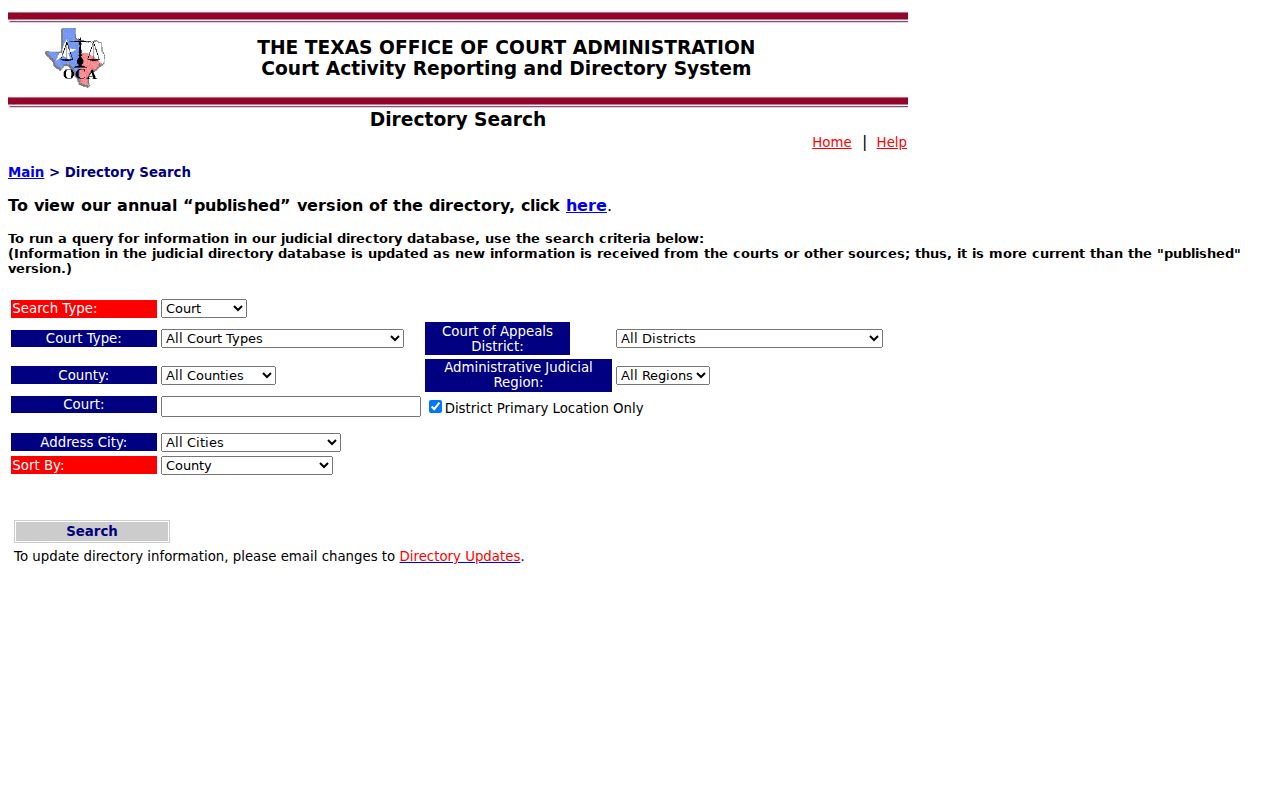
The directory helps Kent County callers find a court or staff contact. It returns no case records.
Kent County Warrant Search Fields Explained
Kent County publishes no warrant search form, so there are no official fields or dropdowns to describe. Gather the details a clerk will want on a call: full name, date of birth, citation or case number, court, and the date of the notice. This is prep for a phone call, not a claim about an online Kent system. Hold back sensitive identity papers too. Don't email them unless the office explains a safe way to submit. A clerk may need enough detail to separate a common name, but confirm the local requirement first.
| Information | Type | Required? | Why It Helps |
|---|---|---|---|
| Full legal name | Text | Not published | Lets staff route the inquiry |
| Date of birth | Date | Not published | May separate people with similar names |
| Cause or citation number | Number or text | Not published | Points to a known court file |
| Issuing court and date | Case details | Not published | Helps locate the right court record |
Kent County Warrant Files and Sheriff Records
Sheriff and court split the paperwork in Kent County. The sheriff may hold records tied to service or custody, while the court or clerk keeps case-side records and controls judicial relief. A written PIA request only seeks records that already exist; it cannot force an office to build a search, answer a legal question, or open a protected file. Juvenile and sealed material may carry added limits. Ask the sheriff for its request route, and ask the issuing court how to inspect its own case records. The Texas Judicial Branch FAQ explains why trial-court searches stay local, directing the public to the clerk or court that holds the file.
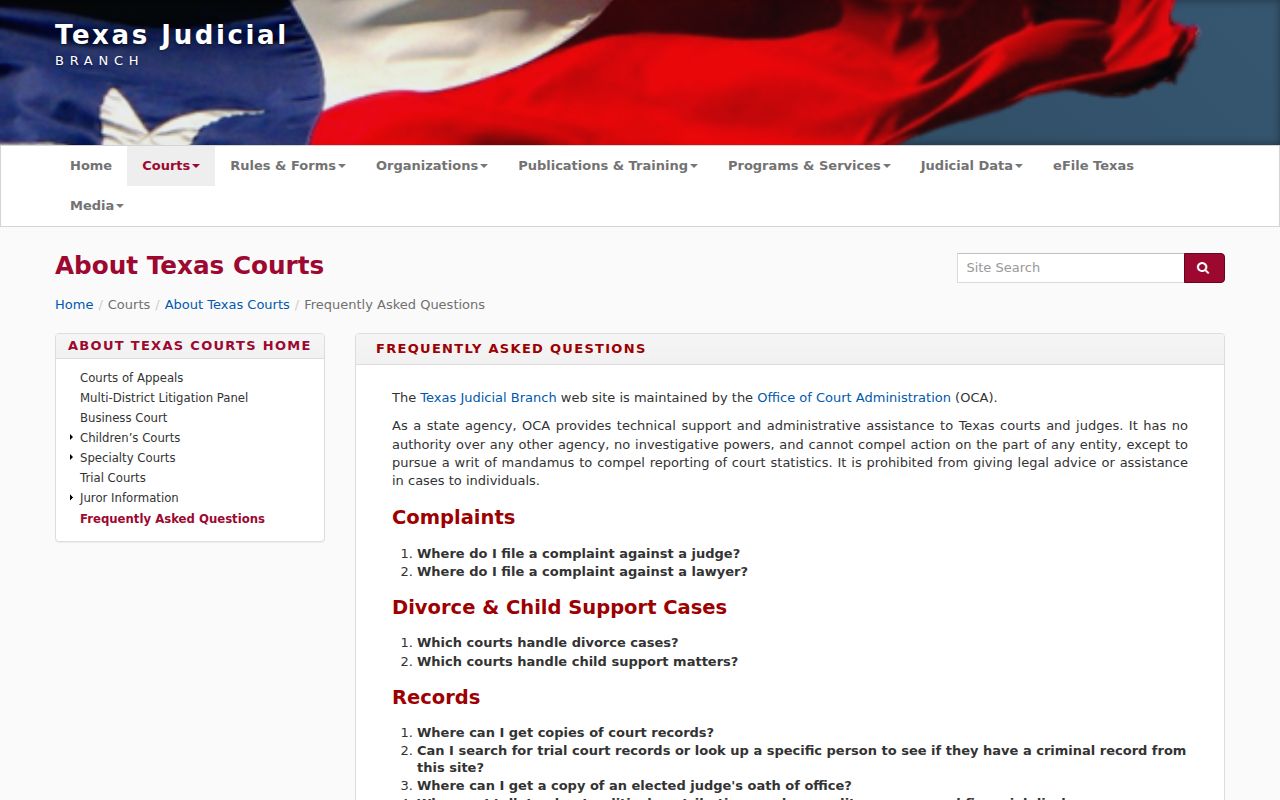
Read the FAQ for routing, then ask the Kent County court about its access process.
What a Warrant Search Shows
Kent County offers no public sample result to inspect. A record that exists may name the court, the underlying case, the warrant type, issue date, status, bond, and service return. Since no local format is published, treat that as a list of questions for the clerk. Ask whether the court has entered an order, whether it remains active, and what step comes next. One caution matters here. A warrant can be recalled while the underlying case stays open.
| Identifier | Local format not published |
|---|---|
| Issuing court | Which court signed or ordered the process |
| Case reason | Charge, missed setting, unpaid judgment, or other order |
| Bond or release | Ask the issuing court or magistrate; no county schedule was found |
| Status | Ask whether it is active, served, recalled, or quashed |
A Name Alone May Not Confirm Status
A name alone proves little. Two people can share it, and the case may sit in a different Kent County court than the one you checked first. Kent's public sources show no common-name matching rule, alias field, status code, or refresh time, so confirm any possible match with the issuing court before acting. Handle the labels with care. "Active" or "outstanding" generally means process has not been reported served or withdrawn, while "recalled" means the court withdrew it and "quashed" means a court set it aside. Those are plain-language explanations, not verified Kent status codes.
- Issued
- A judge or magistrate signed or ordered process.
- Served
- An officer carried out the order and returned the result.
- Recalled or quashed
- The court withdrew or set aside the process.
Where to Check Warrants in Kent County
Match the office to the court level. The 39th District Court handles district-level cases for four counties. Kent County's combined District & County Clerk covers the county and district file route, and the countywide JP keeps justice-court records. Jayton currently lists no official municipal contact. Use the Texas county personnel directory to verify court and clerk contacts; it lists office details, not warrant status.
39th District Court
P.O. Box 966, Haskell, TX 79521
(940) 864-2661
Ask about a district setting or court procedure.
Use the Jayton city or court route for municipal matters in Kent County. The sheriff's list does not cover every lower-court process.
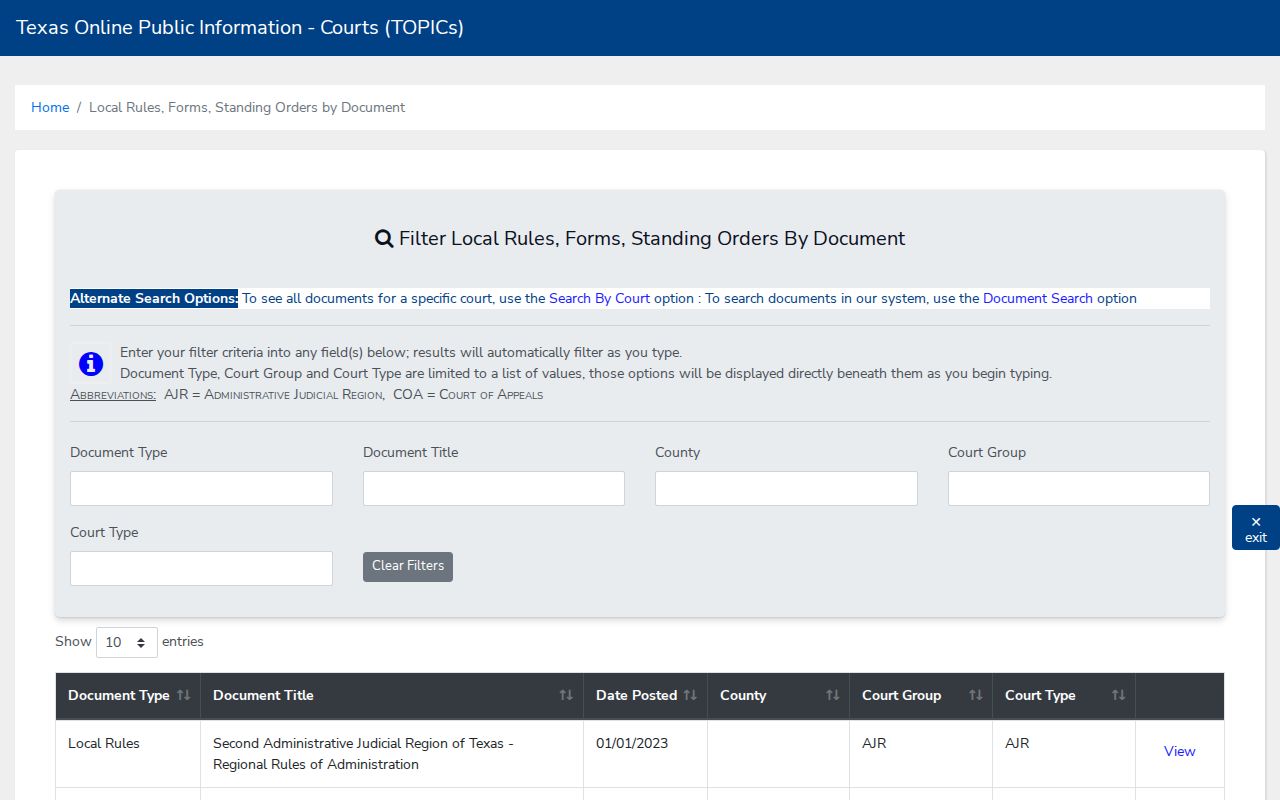
The state forms search may help identify a court document. It is not a Kent County warrant search.
Kent County DPS FTA/FTP and Warrant Checks
Kent County drivers can hit a license block fast. Texas ties a reported citation to driver-license renewal through its Failure to Appear / Failure to Pay program, and OmniBase handles the reporting at 1-800-686-0570. DPS still sends you back to court. The reporting court explains amounts, appearances, and payment plans. TCIC serves law enforcement only. Neither that state system nor the DPS license path offers a public Kent County warrant check. After a court acts, ask when it will send a compliance update; DPS allows up to seven business days for processing. The DPS TCIC description explains who may use the state wanted-person system.
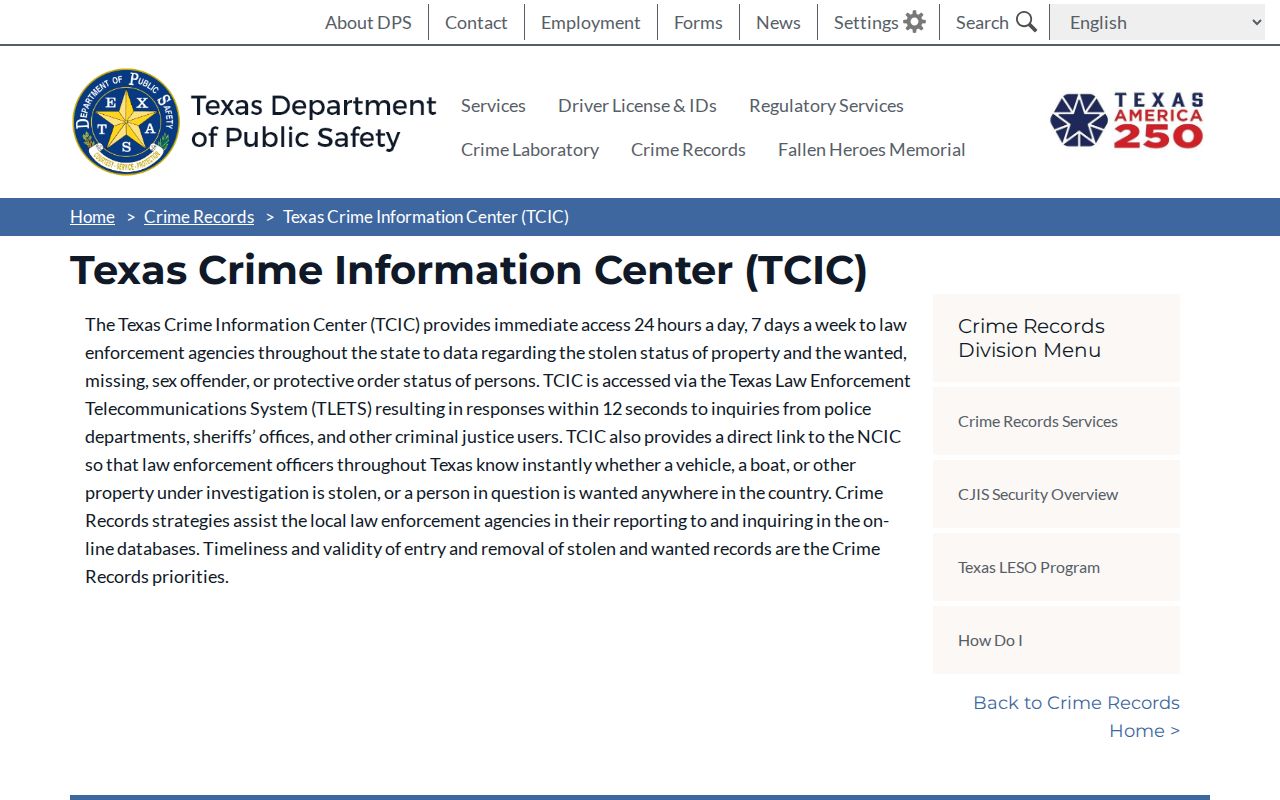
A secure law-enforcement system is not a public portal for checking a name.
Restricted Warrants and Access Rules
Access rules in Kent County turn on the kind of record and who holds it. A child arrest warrant is confidential, complaint included. A search-warrant affidavit usually becomes public after execution, though a judge may seal it under defined conditions. Active-investigation records can stay closed too.
Access limits:
Texas Government Code Chapter 552 sets the public-information process and exceptions.
Code of Criminal Procedure Chapter 18 covers search-warrant access and sealing.
Texas Family Code §58.010 restricts child arrest-warrant records, subject to stated exceptions.
OAG request guidance explains how to ask for an existing public record.
A thin or missing result is no clearance certificate. Confirm your own status with the Kent County court that issued the warrant or the sheriff.
No Online Result Is a Clearance Certificate
Any check covers one system only. A phone call, a directory search, the DPS renewal screen, or a future public list can each miss what another holds. The issuing court can confirm its case and orders. The sheriff explains local service or custody routing. Keep the case number, the date of the call, and any written receipt or order; ask each office what it can verify. If an answer stays unclear, make a narrow written request for an existing Kent County record. The clerk or sheriff will name the next official step.